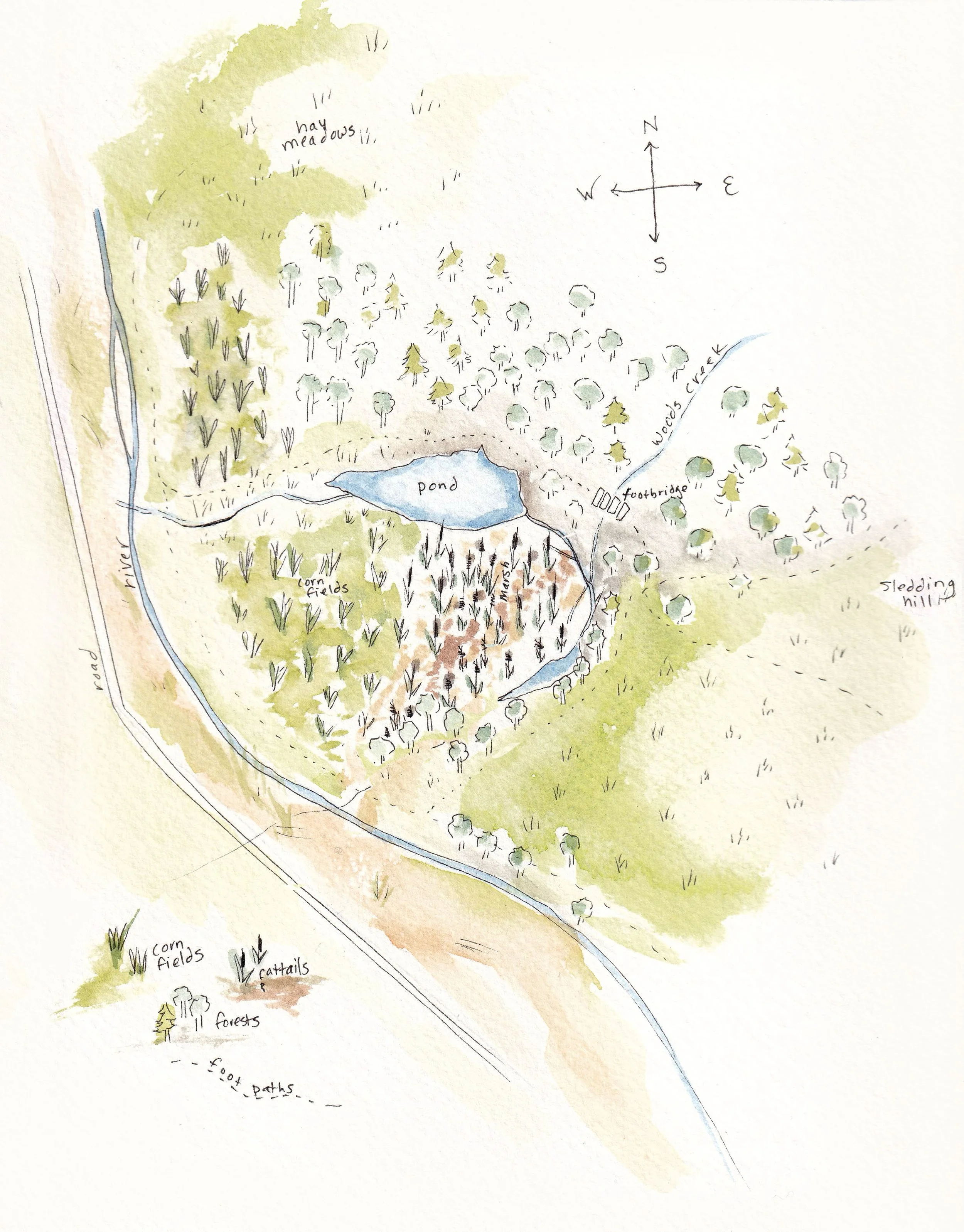
the pond
At the turning-around-point on my daily walk is a pond; a pond and a thick, tangled marsh. The pond was made by beavers in what was once a part of the river – an oxbow in the current of the South River's water that was cut off long ago.
During the late 18th century through the early 20th century, the New England town of Conway was a bustling mill town. Each mill was associated with a dam built across the water to provide power. It was common practice to alter the river by straightening and damming, whether to power the mills or support the development of town roads and infrastructure. All of this straightening and damming has caused flooding and erosion problems in our current century of fiercer storms, however reorganizing the river to its original paths is a heck of a lot of expensive work.
Nobody is quite sure how the oxbow came to be disconnected from its natural place in the river's current. One theory is that a large storm pushed the river past its curve and carved a new, straighter, path. At which point, people intervened and made the change more permanent.
There are kingfishers, snapping turtles, tiny fish, and otters. Red wing blackbirds, cattails, coyotes, and twisty ironwood trees. The beavers come and go, but their work has stayed put, creating this fascinating ecosystem in what is essentially a really big puddle.
the project
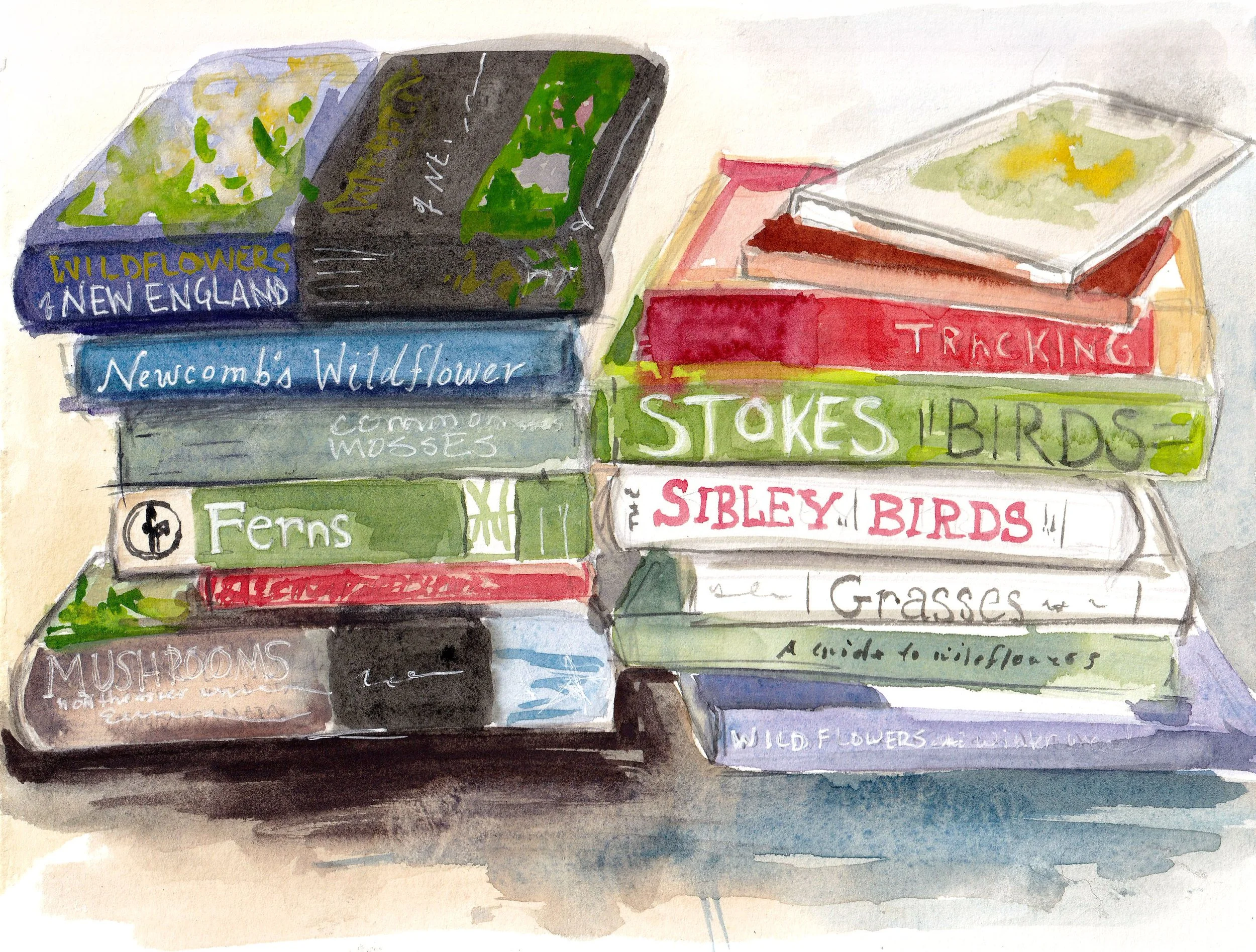
To say "I love this pond" would be an understatement. My pace quickens as I get closer on our walk– wildly excited about what surprise might be awaiting me today. I am obsessed with this pond and I need to tell you about it.
In the fall of 2025 I participated in a Field Naturalist Certification Program with Mass Audubon, part of the program is to complete a capstone volunteer project. I knew I had to somehow incorporate the pond.
And so. I appointed myself the Artist-in-Residence of The Forgotten Oxbow; to spend a year studying, watching, and learning through drawing. And to share it.
the person

My interest in the natural world began in my childhood, but it wasn't until I moved to the hills and woods of western Massachusetts that my fascination was allowed the attention it needed to transform into devotion. I want to plant that seed of attention in others through my artwork and artistic practice.
From my home and the wooded paths I travel daily, I have watched the seasons cycle over 14 years and my drawings have moved with these seasons. The subject of my artwork has shifted from an appreciation for the loveliness of a flower or a sweeping horizon, to a deep joy for the first unfurling leaves of bloodroot in spring. Stopping to take the time to see the land around me through line and color allows me to really process it and to be with it, rather than just existing alongside it.
Mass Audubon's Master Naturalist program gave the nudge I needed to expand past just knowing the names of the plants and animals around me. Learning the science behind the subject of my natural curiosity is bringing new levels of energy to my artwork.
For a look at my big drawings and paintings, go to maggiemadole.com.